Pages

Thursday, 14 February 2013

Man Who Dug Out And Ate His Own Eye Faces Execution Despite History Of Mental Health Issues


How insane does one have to be to avoid being executed?

That's the question asked by longtime capital punishment lawyer Marc Bookman in an essay published this week in Mother Jones about Texas death row inmate Andre Thomas.

In 2004, Thomas killed his estranged wife, his 4-year-old son and her 13-month-old daughter "in the most bizarre case in Grayson County history," Bookman writes.
Andre had cut out the children's hearts and returned home with the organs in his pockets ... he was careful to use three different knives so that the blood from each body would not cross-contaminate, thereby ensuring that the demons inside each of them would die. He then stabbed himself in the chest, but he did not die as he had hoped. In fact, he was well enough to leave a message on his wife's parents' phone explaining that he thought he was in hell, and he managed to confess to the police what he had done before they took him in for emergency surgery.

Bookman, who has never represented Thomas, told The Huffington Post he believes the 29-year-old defendant, who was convicted and sentenced to death in 2005, will eventually be spared from execution. He points out that, while behind bars, Thomas gouged out each of his eyes in two separate incidents, and on the most recent occasion ate his left eye.

Thomas "didn't want the government to read his thoughts, so he ate the eye because he was certain they would figure out some way to put it back in," Bookman writes.

"I'm hoping at this point, someone will take a step back and say it's just not civilized to seek someone's execution when that person is so profoundly mentally ill," Bookman told HuffPost. "He wasn't culpable in the way that someone who is not mentally ill would be."

In order to be found not guilty by reason of insanity, the defense's case "hinges on a defendant's inability to connect his crime with the consequences," Bookman writes. In Texas, a suspected killer whose insanity was caused by voluntary intoxication can't use insanity as a defense.

That's exactly what the prosecution in Thomas' case successfully argued. Grayson County district attorneys said the crimes were likely sparked by Thomas' ingestion of cough medicine, alcohol and marijuana.

Bookman said Thomas' trial attorneys didn't bring up their client's long personal and family history of mental illness.

"As with many of these cases, the defense at trial did not do a particularly great job," Bookman said. "They didn't have much of the evidence of his mental illness. It wasn't until his federal lawyers got involved that these records came to light."

Thomas, as Bookman documents, comes from at least two generations of family members with serious mental health problems.

Maurie Levin, Thomas' lead attorney handling his appeal, said her client has been hearing voices in his head since he was 9 years old.

Thomas said he killed his three victims because he believed he heard a message from God telling him to kill "Jezebel, the Antichrist, and a related evil spirit," Bookman writes. He also notes that even doctors representing the state have diagnosed him as a paranoid schizophrenic.

"I don't think he knew right from wrong," Bookman said. "He has been under the sway of delusions for a large part of his life. At some point he says when he hears voices, he's not sure who's speaking, if it's his voice or if it's someone else's voice."

Grayson County District Attorney Joe Brown said there was ample evidence presented at trial that showed Thomas knew what he was doing was wrong.

"He ran away from the crime scene and tried to avoid detection. He took equipment to the scene to cover up what he was doing, and there was planning of the deaths," Brown said. "When he's going away from the scene, he hears sirens and runs away. If you don't know you've done something wrong, then why would you run?"

Brown also said Thomas turned down a plea deal for life in prison.

"He had mental illness, but that's not the standard for exoneration in the case. And his mental illness was caused or at least exacerbated by heavy drug use," Brown said.

Levin said she knows she faces extra hurdles in Texas, a state responsible for 37 percent of all executions in America since 1977, but she's cautiously optimistic her client will stave off lethal injection.

"I have to have faith that any reasonable judge will see the travesty of pressing the execution of somebody as mentally ill as Andre," Levin said.

huffingtonpost

Tuesday, 12 February 2013

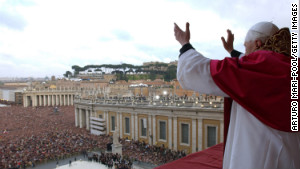
One of these men will be the next pope...meet the candidates

1. Cardinal Peter Turkson of Ghana
Peter Turkson, Ghana, New Pope
Cardinal Peter Turkson is the president of the Pontifical Council for Justice and Peace, appointed by Pope Benedict XVI in 2009. He studied at St. Teresa's Seminary in the village of Amisano and later at St. Anthony-on-Hudson Seminary in Rensselaer, New York, where he obtained a Master's degree in Theology. He was ordained into priesthood by Archbishop John Amissah in 1975. In 1992, Turkson was appointed Archbishop of Cape Coast by Pope John Paul II and then made him Cardinal-Priest of S. Liborio in 2003. He is the first Ghanaian cardinal. If elected, he will be the first black pope and pope from Africa.

2. Cardinal Marc Ouellet of Canada
Mark Ouellet, Next Pope

Cardinal Marc Ouellet is the prefect of the Congregation for Bishops and president of the Pontifical Commission for Latin America, appointed by Pope Benedict XVI, elevated to the cardinalate by Pope John Paul II in 2003. He was previously the archbishop of Quebec and primate of Canada. He is a strong candidate for the next pope, but Ouellet once called the idea of being pope "a nightmare."

3. Cardinal Francis Arinze of Nigeria
Francis Arinze, New Pope

Cardinal Francis Arinze is Prefect Emeritus of the Congregation for Divine Worship and the Discipline of the Sacraments and Cardinal Bishop of Velletri-Segni. He was one of the principal advisors to Pope John Paul II. If elected, he will be the first black pope and pope from Africa.

4. Cardinal Leonardo Sandri of Argentina
Leonardo Sandri, New Pope

Cardinal Leonardo Sandri was born to Italian parents, but raised in Buenos Aires. He is the Prefect of the Congregation for the Oriental Churches, elevated to the cardinalate in 2007. If elected, he will be the first pope from South America.

5. Cardinal Oscar Rodriguez Maradiaga of Honduras
Oscar Rodriguez Maradiaga, New pope

Cardinal Oscar Rodriguez Maradiaga is the Archbishop of Tegucigalpa and President of Caritas Internationalis, elevated to the cardinalate in 2001. He was a contender for papacy during the last conclave when Pope Benedict XVI was elected. Maradiaga is an advocate of global anti-corruption and the pardoning of debt for poorer countries.

6. Archbishop Angelo Scola of Italy
Angelo Scola, New Pope

Angelo Scola was appointed Archbishop of Milan by Pope Benedict XVI in 2011 and was previously Patriarch of Venice. He is a scholar on Islam and Catholic-Muslim dialogue.

7. Cardinal Gianfranco Ravasi of Italy
Gianfranco Ravasi, New Pope

Cardinal Gianfranco Ravasi is an Italian prelate and serves in the Roman Curia as President of the Pontifical Council for Culture. He was elevated to cardinalate by Pope Benedict XVI in 2010. He is described as intellectually brilliant and a great communicator both in and out of the church.

8. Cardinal Angelo Bagnasco of Italy
Angelo Bagnasco, New Pope

Cardinal Angelo Bagnasco is the Archbishop of Genoa and President of the Italian Episcopal Conference, elevated to cardinalate in 2007. He is considered to be more conservative in his views.

9. Cardinal Christoph Schonborn of Austria
Christoph Schonborn, New Pope

Cardinal Christoph Schonborn is the Archbishop of Vienna and President of the Austrian Bishops Conference, elevated to cardinalate in 1998. He recently allowed a gay catholic to serve on a parish council.

10. Cardinal Tarcisio Bertone of Italy
Tarcisio Bertone, New Pope

Cardinal Tarcisio Bertone serves as serves as Cardinal Secretary of State and Camerlengo and was previously the Archbishop of Vercelli. He was elevated to cardinalate in 2003.

Pope Benedict XVI's resignation explained


In an unexpected move, Pope Benedict XVI -- born Joseph Ratzinger -- has announced that he is to resign. Benedict was elected pope in 2005 after the death of Pope John Paul II. We explore what the surprise announcement means for the Catholic Church.
 
 
Why has Pope Benedict XVI resigned?

In his statement, Pope Benedict -- who turns 86 in April -- said he had come to the certainty "that my strengths, due to an advanced age, are no longer suited to an adequate exercise of the Petrine ministry."

Vatican spokesman the Rev. Federico Lombardi said Pope Benedict had the right and potentially the duty to resign.

But he stressed that the pope's decision was not because of any external pressure.

 
Is the pope in poor health?

Lombardi told reporters the pope was not unwell.

"There isn't any disease specifically -- it's all to do with deterioration and weakness in his body, as the holy pontiff has said in his statement," he said.

Lombardi said the battery in the pope's pacemaker -- which he has had since he was a cardinal -- had been replaced in the last few months, but he stressed that it was a routine procedure.

When will he step down?

The pope said that he would step down at 8:00 p.m. on February 28, Rome time.

Lombardi said as far has he knew, the day was "just an ordinary day" without particular significance but that Pope Benedict might have chosen it to ensure a new pope was in place for Easter.

He said he understood the pope usually finished his working day at 8:00 p.m. which was why he had chosen that specific hour to step down.


Is it normal for popes to resign?

It is the first time a pope has resigned in nearly 600 years.

The last pope to resign was Pope Gregory XII in 1415. He stepped down to end the "Great Western Schism" -- during which there were rival claims to the papal throne.

In 1294, Pope Celestine V resigned after only five months, preferring the simple life of a monk to the majesty of being pope.

According to the National Catholic Weekly, modern popes have felt that resignation is unacceptable and could encourage factions within the church to pressure pontiffs to step down.

Canon law states that a resignation must be made freely and properly manifested and that the pope resigning must be of sound mind.


When will the next pope be elected?

A meeting of the College of Cardinals to elect the next pope will be held. The gathering is known as a "conclave."

Vatican spokesman Federico Lombardi said there would be elections some time in March and he anticipated that there would be a new pope before Easter.

Lombardi said Vatican scholars were studying the constitution to determine exactly when the conclave would begin.

What is the election process?

By law, the conclave begins in the Sistine Chapel. On that morning, the cardinals will celebrate the Votive Mass, "Pro Eligendo Papa." That afternoon, the cardinals begin the election process.

The cardinals draw lots to select three members to collect ballots from the infirm, three "tellers" to count the votes and three others to review the results.

Blank ballots are then prepared and distributed. The ballots are rectangular in shape and must bear in the upper half, in print if possible, the words "Eligo in Summum Pontificem," meaning "I elect as supreme pontiff." The electors write the name of the candidate on the lower half and fold it in two.

After writing the name of one man on his ballot, each of the active cardinals -- those under 80 years of age -- walks to an altar in order of seniority and pledges to perform his duty with integrity. Each cardinal then places a folded ballot containing his choice onto a small disc made of precious metal and drop it inside a chalice.

After all votes are cast, the tellers tally the ballots and the result is read to the cardinals. If a cardinal receives two-thirds plus one of the votes, he is the new pontiff.

If there is no winner, another vote is taken. If there is still no winner, two more votes are scheduled for the afternoon.

How is the result of the vote broadcast?

After the votes are counted each time, the ballots are burned. If there has been no winner, a chemical is mixed with the ballots to produce black smoke when they are burned.

Sight of the black smoke emerging from the roof of the Vatican Palace tells those waiting in St. Peter's Square that a pope has not yet been selected.

When a winner has been selected, the ballots are burned alone, and the white smoke indicates there is a new pope.

What do you think of the Pope's decision?

What will the pope do until he officially steps down?

Lombardi said the pope's appointments up until the end of February -- including audiences with the presidents of Romania and Guatemala -- had been confirmed.

On February 27, the pope's last general audience will take place. Lombardi said the Vatican was trying to arrange for it to be held in St Peter's square so that more people could attend and "to make it a sort of tribute to the holy pontiff."
 
CNN

Saturday, 9 February 2013

Jubilation In Enugu As Gov.Chime Returns

Governor Sullivan Chime of Enugu State, yesterday, returned to a tumultuous reception in Enugu after his extended vacation abroad.


Chime, who wore dark glasses and acknowledged cheers from the crowd that gathered at Akanu Ibiam airport, Enugu, did not speak with newsmen who were anxious to have his message to the people he left behind for about five months.

Hundreds of Enugu people including state government and local government officials converged at the airport and after receiving him at the airport, they escorted him in a long convoy to the Government House.

The Governor who had arrived Abuja, Wednesday from London, touched down at the Akanu Ibiam International Airport Enugu around 3.pm yesterday amid cheers from the crowd of enthusiastic citizens who had thronged the airport since morning to welcome him.

He was welcomed on arrival by the Acting Governor, Mr. Sunday Onyebuchi accompanied by his wife, Nneka, national and state House of Assembly members and other top government officials.

Spotting a cream white jacket, blue stripped shirt and a pair of black trousers, Chime acknowledged cheers from the ecstatic crowd that included many federal and state legislators, traditional rulers and top government officials before being driven to the Governor’s Lodge.

Another huge crowd of singing and dancing people was at hand at the Lodge, where Governor Chime and his wife, Clara took time to receive many guests. It was also celebration galore on the streets of Enugu as soon as news filtered in that the governor had arrived the CoalCity, with the people chanting victory songs. His return finally marked the end of his absence as the excited residents heaved sighs of relief.

vanguard

Rugby Sevens in Las Vegas this weekend... Watch video clips of highlights!

England, which won last weekend's Wellington Sevens in New Zealand, lost both its opening matches to Fiji and Portugal. Kenya, which lost the Wellington final to England, lost to Canada and narrowly beat Uruguay....


Wellington Cup champions England lost both their matches - to Fiji and Portugal - on the opening day at the USA Sevens in Las Vegas.

Four teams - defending champions Samoa, Fiji, South Africa and New Zealand - have won both of their matches to lead the way, but the Cup quarters remain wide open with the final pool games still to be played on Saturday.

On another competitive day results at the Sam Boyd Stadium have left all 16 teams still capable of qualifying for the Cup quarter-finals on day two.

If three teams are level on competition points at the end of the pool stages, the team with the highest points difference will go through to the Cup quarters.

 Kenya - who were edged out by England in the Cup final in Wellington - lost to Canada and only narrowly beat Uruguay.

Spain bounced back from an opening defeat to defending champions Samoa to produce a remarkable performance and beat Australia, ending their impressive run which had yielded nine wins in their last 10 matches.

Day Two Pool fixtures:
Fiji v Portugal
Canada v Uruguay
France v Wales
Samoa v Australia
England v Scotland
Kenya v South Africa
New Zealand v Argentina
Spain v United States
Click below to watch video:
 

Pool A (England, Scotland, Fiji, Portugal)

Fiji, who will be without both their suspended captain Setefano Cakau and Manueli Lagai for the remainder of the tournament, won both of their opening matches on day one of the USA Sevens at the Sam Boyd Stadium, narrowly holding on to a 14-12 victory against Scotland, with Russell Weir narrowly missing a last-minute penalty drop goal.

England, last week's champions, lost both of their opening matches, against Fiji 26-17 with two tries from Samisoni Viriviri and Portugal, 21-5.

Scotland beat Portugal in their first match, with Mark Robertson and Michael Fedo scoring the tries and Colin Gregor's touchline conversion proving decisive.

All three teams, however, are still in with a chance of reaching the Cup competition depending on results on day two.


Pool B (Kenya, South Africa, Canada, Uruguay)

South Africa became the second side to end day one with a 100% record, adding a 17-5 victory against Canada to an impressive 45-0 victory against the only non-core side competing in Las Vegas, Uruguay.

Canada defeated Kenya early on, which meant both of the Hertz Sevens finalists lost their opening matches. Sean Duke crossed for his 22nd try of the Series with Nanyak Dala and Jeffery Hassler scoring Canada's other tries.

Mike Friday's Kenyans bounced back from their opening defeat, riding their luck to come from 7-5 down and inflict a second defeat on Uruguay, Biko Adema benefiting from smart work by Oscar Ayodi.


Pool C (New Zealand, Argentina, France, Wales)

New Zealand also won both of their two matches on day one, conceding just five points in the process.

Belgium Tuatagaloa helped the reigning Series champions beat France 21-0 with two of their three tries before they beat Wales 40-5 with Ben Lam crossing for a hat-trick.

Reigning Rugby World Cup Sevens champions Wales beat Argentina in a rematch of that 2009 final in Dubai 17-7 in their first match of the USA Sevens.

Javier Rojas secured a 14-12 victory for Argentina against France, Los Pumas' first win of the day, and Les Bleus' second defeat. Both sides can still reach the Cup quarters.

Pool D (Samoa, Australia, Spain, USA)

Defending champions Samoa maintained a 100% record on day one, beating hosts USA and Spain.

They came from 12-0 behind to beat Spain 19-12, with captain Afa Aiono scoring the winning try under the posts to the delight of the crowd at the Sam Boyd Stadium, before Levi Asifa'amatala and Reupena Levasa scored the tries against USA.

Spain bounced back to defeat Australia 24-14 to bring an end to an impressive run from Michael O'Connor's side, who had won nine of their previous 10 matches.

The hosts USA lost their opening match to Australia 26-7, although they too can still make it to the Cup tomorrow if they beat Spain and points difference goes their way.


Results:

Samoa 12 - 7 United States
Australia 14 - 24 Spain
Argentina 14 - 12 France
New Zealand 40 - 5 Wales
South Africa 17 - 5 Canada
Kenya 12 - 7 Uruguay
Scotland 12 - 14 Fiji
England 5 - 21 Portugal
Australia 26 - 7 United States
Samoa 19 - 12 Spain
Argentina 7 - 17 Wales
New Zealand 21 - 0 France
South Africa 45 - 0 Uruguay
Kenya 12 - 19 Canada
Scotland 12 - 10 Portugal
England 17 - 26 Fiji

With thanks to the IRB